

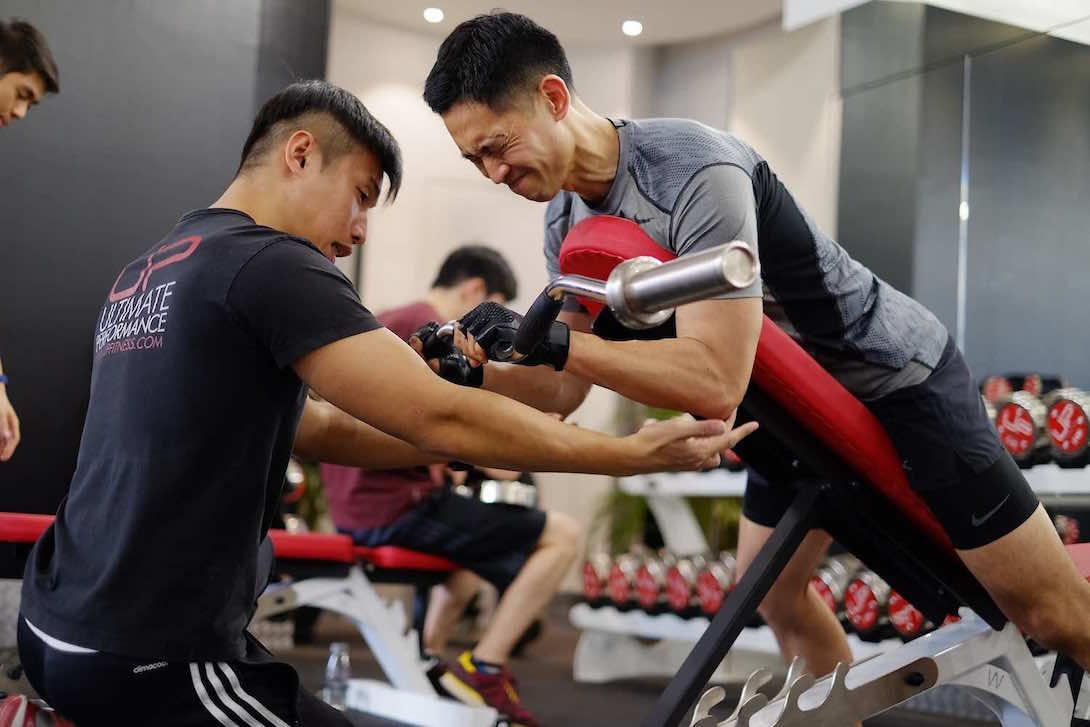
When new clients start at Ultimate Performance, we almost never fail to get an email the following day with complaints of how it feels like their legs have been hit repeatedly with a baseball bat.
A couple of weeks later, however, these same clients are rarely sore, and if they are, certainly not to the dramatic levels experienced in their first week.
Why does this happen?
The soreness you experience is commonly referred to as Delay Onset Muscle Soreness or DOMS. It’s a product of inflammation caused by muscular damage during training.
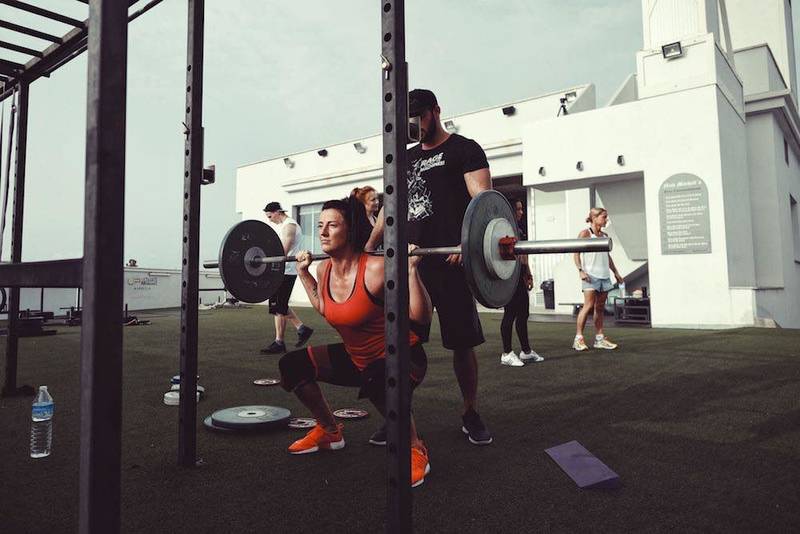
In particular, it’s the eccentric part (the lengthening or stretching phase) of a movement, such as the lowering phase of a squat that is most responsible for the pain caused.
How long should it last?
DOMS should typically last anywhere from 24 to 48 hours, maybe a little longer.
If it falls in that range, it’s probably a sign of a good workout.
If you’re limping around six days after, you may have overdone it.
That being said, in the first week or so into training, no matter what you do, you’re going to experience soreness for three to five days.
Sensitivity to Soreness
The greater your level of training experience, and the more consistent you are with your training, the less sensitive you’ll be to DOMS. This is because your body adapts to the stress of exercise to the body, and becomes better at doing so the more experienced you are.
As a result, the number one tip to prevent crippling soreness from day one is to start slow and build your training volume up.
4 Ways to Reduce Muscle Soreness
1. Protein Intake
One of the first changes we make to any client’s diet is to increase their protein intake to approximately 2 to 2.5 grams per kilogram of bodyweight.
Protein’s primary role in the body is ‘growth and repair’. The reason our clients don’t feel as sore later into their training with us is due to their increased protein intake.
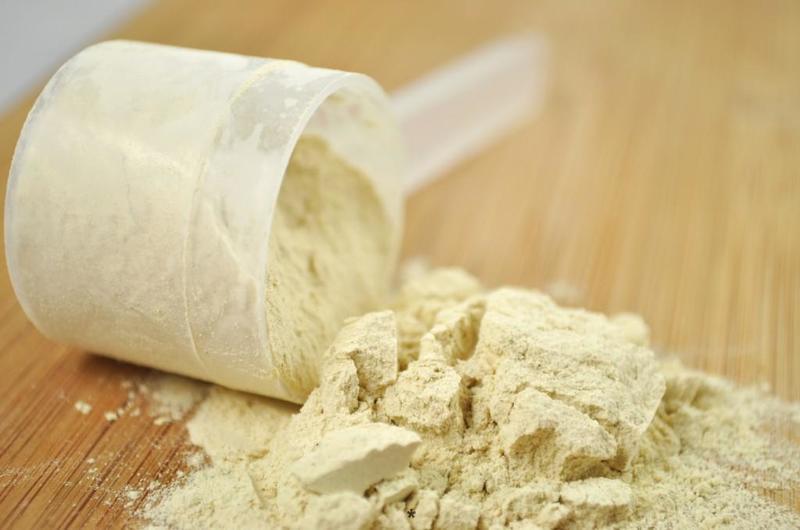
This is not to say if you eat protein, your soreness will go away. It’s not as simple as that. But it does highlight our body’s need for this macronutrient to help repair muscle damage.
During your training, it may be worth supplementing with 10-20 grams of branched chain amino acids (BCAAs), which have been proven to reduce muscle breakdown when training.
2. Active Recovery
Most people resort to stretching when they feel sore the day after training. Whilst it seems like the obvious thing to do, it doesn’t work in the real world, and research now shows it makes no real difference either.
What works best is promoting blood flow into the areas that are sore, and staying active!

For example, if you’re particularly sore in your legs, doing some light activity (e.g. going for a walk) and creating blood flow can help shuttle some much-needed nutrients into the area of inflammation.
Additionally, recovery modalities like foam rolling/massage, Epsom salt baths and improving the quality of your sleep (in particular) will all help.
3. Low Inflammation Diet
To combat the inflammation from DOMS, you need to make sure your diet isn’t adding to the problem.
Eating a diet rich in vegetables and essential fats, whilst limiting overly processed foods is a good rule of thumb to follow.

More importantly, avoiding foods that don’t agree with you can go a long way in preventing any additional inflammation.
One supplement that has been heavily researched as a way to reduce inflammation, muscle pain and accelerate recovery is curcumin. This super nutrient, taken in doses of 400-800mg a day may help reduce some of the symptoms experienced.
4. Limit the Eccentric
The greatest amount of muscle damage comes from the eccentric portion of the exercises.
Whilst you wouldn’t want to eliminate the eccentric portion of an exercise (as that’s where a lot of the muscle building potential comes from), you could pick exercises that create less damage.
Typically, exercises loading the muscle through an extremely stretched position, like a Romanian deadlift, will create more soreness in the hamstrings than a machine leg curl.

Ultimately, though, if you build your work capacity slowly, and train regularly, your soreness from workouts will be dramatically reduced.
In the meantime, take these steps:
- Start slow
- Increase your protein intake
- Stay active
- Promote blood flow
- Eat an anti-inflammatory diet